support the book club

Independent literary spaces like The Book Club PH survive on the generosity of readers who believe that the written word still matters. Your support keeps our shelves stocked, our conversations flowing, and our community thriving — free from ads, algorithms, and corporate influence.

₱100/month

Coffee-sized kindness

₱250/month

Sustaining supporter

₱500/month

Literary champion

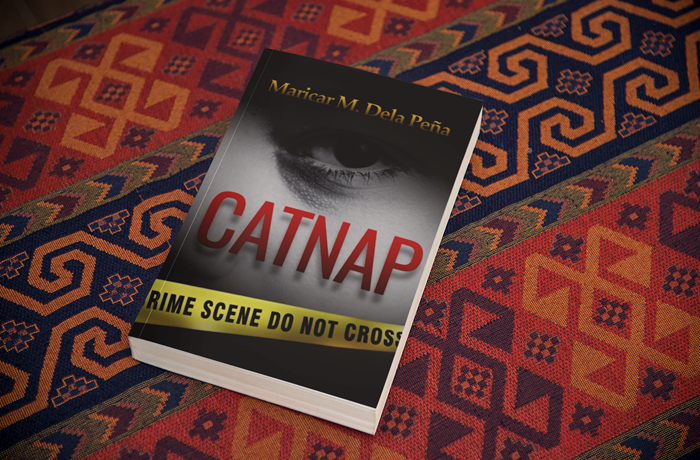
Unraveling Fear, Motherhood, and Mystery: A Book Reflection on Catnap by Maricar Dela Peña

In our recent book club meeting on Catnap, Maricar Dela Peña invited us into the shadowed corners of Masbate, where a mother’s desperation becomes the engine of a gripping mystery. What began as a discussion of a suspense novel quickly deepened into an exploration of psychology, law, and the quiet terrors that haunt Filipino communities. The conversation revealed not only the craft behind the book but also the lived realities that shaped it.

Diana as the Beating Heart of the Story

Diana emerges as a compelling protagonist precisely because she is ordinary—an everyday single mother thrust into an unimaginable nightmare. Her motherhood is not a backdrop but the very force that shapes every decision she makes. Each lead she chases, each rumor she follows across Masbate’s towns, is driven by a primal instinct: to reclaim her daughter Jessica, no matter the cost.

Participants noted how Diana’s emotional unraveling felt painfully real. Her fear sharpens into determination, then frays into exhaustion, and finally hardens into a kind of desperate clarity. This evolution anchors the novel’s emotional stakes. Among the supporting characters, Dr. Marie Mongaya stood out as both a source of tension and uneasy comfort—her expertise offering hope, yet her presence raising questions about trust and motive.

Suspense Built on Clues, Misdirection, and the Familiar

Maricar shared that she wanted readers to keep guessing, and this intention pulses through the novel’s structure. The tension around Jessica’s disappearance is built through a careful layering of clues: the whispered sightings of a white van, the estranged husband’s suspicious behavior, the online rumors that blur fact and fear. Some clues felt convincing enough to chase; others were deliberately misleading, echoing the chaos of real investigations where every lead feels urgent.

The pacing kept the group engaged, especially as the narrative tightened toward its final twists. Maricar’s background in nonfiction and her fascination with suspense authors helped her craft a rhythm that felt both grounded and propulsive.

Masbate as a Living, Breathing Character

One of the most striking elements of Catnap is its setting. Masbate is not merely a backdrop—it shapes the story’s atmosphere with its geography, culture, and silences. Participants appreciated how Maricar wove in local details, from the April Rodeo Festival to the contrasting landscapes of Palani’s quiet shores and Placer’s bustling streets.

Certain locations felt especially haunting: the isolated roads where rumors of the white van spread, the courthouse where truth becomes a performance, the domestic spaces where fear settles like dust. Masbate becomes a character in its own right—beautiful, vulnerable, and complicit in the unfolding mystery.

The Psychology of Desperation

As the search for Jessica intensifies, Diana’s emotional state becomes increasingly fragile. The story suggests that when hope begins to slip away, a person’s moral boundaries blur. How far will a mother go to save her child? What happens when fear becomes the only compass?

This question led the group into a fascinating discussion on somnambulism, criminal liability, and the thin line between innocence and culpability. Marie, drawing from legal knowledge, explained that a person acting while sleepwalking has no criminal liability—though civil liability may still apply. This sparked comparisons to real-life defenses and highlighted how Catnap’s legal scenes felt authentic, a realism Maricar attributed to her work in the courts.

Craft, Accuracy, and the Possibility of a Sequel
Participants with legal backgrounds affirmed that the courtroom scenes rang true, praising the procedural accuracy woven into the narrative. Maricar shared that her experience as a court employee informed these depictions, grounding the novel’s suspense in real-world processes.

When asked whether Catnap was meant to be a whodunit or a domestic drama, Maricar explained that she aimed for a hybrid—plot twists consistent with suspense tradition, but anchored in character and motive. She also revealed that she has considered writing a sequel, a possibility that excited many in the group who felt the story’s world still had shadows left to explore.

Beyond the Book: Community, Media, and Mental Health

The discussion eventually expanded beyond the novel itself. Participants exchanged media recommendations, reflected on the cultural resonance of the “white van” panic, and even brainstormed promotional ideas tied to mental-health awareness—an issue subtly threaded through Diana’s psychological journey.

Maricar expressed gratitude for the thoughtful responses, noting how meaningful it was to see readers engage with both the craft and the deeper themes of her work.

Conclusion

Our book disccusion on Catnap became more than a literary discussion—it became a collective examination of fear, justice, and the lengths to which love will go. Through Diana’s story, Maricar Dela Peña reminds us that suspense is not only about uncovering a culprit; it is about confronting the truths we fear most. And in the quiet moments after the discussion ended, it was clear that Catnap had left its mark—not just as a mystery, but as a mirror held up to the vulnerabilities of the human heart.
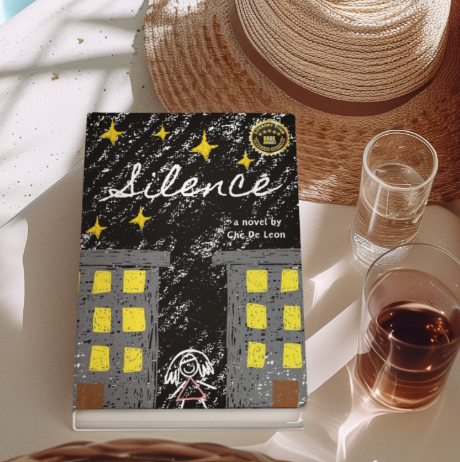
Exploring Neurodivergence, Cultural Trauma, and the Evolving Power of Silence

When we gathered last January for the 8Letters book club session featuring Che de Leon’s Silence, I expected a thoughtful discussion. What I didn’t expect was how quickly the room would shift from a simple author Q&A into a layered, vulnerable exploration of what silence means in a world that demands constant noise. Sitting there, listening to Che speak with such clarity and honesty, the conversation stretching far beyond the novel’s pages and into the lived experiences of everyone present.

What is the Novel, Silence, about? Here’s the Blurb:

Trapped in a society where only perfection was accepted, Lily had lost her tongue. One day, a girl in a pink and green sweater appears on her doorstep, dangling an offer that she cannot refuse. To get her life back, Lily follows Sweater Girl to the middle of the unforgiving City on the mountains. Haunted by the memories of happier days, she must overcome all odds in order to reclaim her missing tongue–and end her silence.

Literary Titan rated the novel a whopping five stars!

Silence, by Che De Leon, is a gripping dystopian novel set in a world where society is starkly divided into the Complete and the Incomplete. The chasm between these two groups has never been wider, with desperation and greed ruling the day. The black market thrives, as the wealthy treat body parts like fashion accessories, swapping them at will. Amidst this chaotic world, we meet Lily—the girl with no tongue. In this brutal reality, De Leon explores the fragility of humanity. Can a world built on violence, theft, and survival possibly change? Is there room to dream of something better, or is hope a luxury no one can afford? These questions are at the heart of Lily’s journey, as she navigates a life torn between the past and the present.

One of the first questions asked during the session was whether Silence was meant to comment on the digital age’s obsession with visibility. “When I wrote Silence, social media was so far from my mind,” she said. “All I wanted was to tell the story of a girl who has trouble communicating.”

Not every story born in our hyperconnected era is a reaction to it. Sometimes, a story is simply a reaching out, a hand extended from one lonely place to another. The author spoke openly about writing from a neurodivergent perspective, about navigating a world built for neurotypicals where even simple emotions become complicated terrain. “Sometimes you say, ‘I’m sad,’ but how do you really know how sad the person is?” she asked.

Silence as Punishment, Silence as Power

When the conversation turned to how silence functions today versus in past generations, Che’s insight was that, “In the past, silence was seen as limiting, as punishment,” she said. “But today, silence can be weaponized. You can regain your power through silence.”

Another striking moment came when Che reflected on the difference between being silenced and choosing silence.

“Being silenced is when your agency is taken away. But being silent, that’s different. That’s a choice.”

The book’s protagonist, Lily, isn’t passive. It’s shaped by trauma, yes, but also by discernment, self‑protection, and eventually, self‑possession.

The discussion widened to broader societal issues, from the impact of social media to the complexities of global conflicts such as the Israeli-Palestinian conflict. Silence isn’t just a novel about a girl who struggles to communicate. It’s a mirror held up to the ways we navigate a world overflowing with noise, expectation, and misunderstanding. It asks us to consider what we say, what we withhold, and why.

As the discussion moved deeper into the emotional and cultural layers of Silence, another member, Alvin brought up Nick Joaquin’s The Woman Who Had Two Navels, a novel that uses silence to expose the wounds of colonial trauma and fractured identity.

“When it comes to cultural trauma, I guess now that I’m thinking about it, maybe I was informed by it. Because in the Philippines, we have only known defeat.”

Che spoke of a nation that has been repeatedly invaded, colonized, and forced into submission, a people who learned, generation after generation, that survival often meant staying quiet.

“We’ve only ever known that we lost,” she said. “Maybe if we become quiet, we don’t get hurt. Maybe if we just accept it, we don’t get hurt.”

A Character Shaped By Quiet Inheritance

Mitchie added another layer to the conversation, reflecting on Lily’s voice in the novel.
“What I really like about Silence was the character arc,” she said. “In my head, I pictured the protagonist’s voice to be small, tiny, soft, somehow childlike.”

Lily’s softness isn’t a weakness. Lily’s softness is a result of a world that has taught her to be cautious. Even if the author didn’t consciously write Lily as a product of historical trauma, the parallels were unmistakable. Lily’s quietness is not just personal. It is generational. She admitted she had never explicitly connected her narrative to colonial trauma, yet the connection revealed itself naturally through conversation.

In Conclusion

The discussion made me realize that writers often carry their histories in their bodies, in their instincts, in the stories they feel compelled to tell. Sometimes, the page knows before the writer does.

In Silence, the quiet is not empty. It is layered with memory: personal, cultural, ancestral. It conceals, yes. It preserves. And in many ways, it transforms.

Behind the Story: Craft, Chemistry, and Realism in Love on a Deadline 

At a recent book club session, participants gathered to discuss Love on a Deadline by Jacq Parairo-Viray, a newsroom romance that blends professional ambition with emotional vulnerability. What followed was a thoughtful conversation not just about the book itself, but about the craft of writing romance, cultural realism, and the responsibility of storytelling.

First Impressions: A Strong Start

The session opened with an introduction to the novel’s premise and the author’s background in journalism and copywriting. Early reader reactions were overwhelmingly positive. Attendees praised:

  • The engaging premise
  • The chemistry between Samantha and Axel
  • The vibrant personality details (including a “golden retriever” type charm)
  • The adherence to—and effective use of—romance conventions

Right away, it was clear that Love on a Deadline delivers what readers expect from the genre while still offering something fresh.

The Power of Opposites

At the heart of the novel is the classic “opposites attract” trope—and it works.

Samantha, driven and perfectionistic, contrasts sharply with Axel’s more relaxed demeanor. But beneath that easygoing surface lies something deeper: high-functioning anxiety. Rather than feeling cliché, their differences create meaningful tension and growth.

Participants noted how:

  • Samantha’s need for parental approval shapes her decisions
  • Axel’s anxiety adds emotional depth and realism
  • Their personalities act as mirrors, pushing each other to evolve

The pairing was even described as a “Black Cat / Golden Retriever” dynamic, one that balances emotional weight with warmth and humor.

Influences and Familiarity

The discussion also touched on how the novel fits within broader romance traditions. Readers recognized familiar storytelling patterns, including influences similar to Romance Class-style narratives. Some even compared the tone and character archetypes to anime and TV series like The Newsreader.

Rather than being a drawback, this familiarity was seen as a strength. One participant noted that Love on a Deadline executes these well-known formulas better than many comparable works.

Writing Real People: Internal Conflict and Cultural Context

Where the conversation became especially meaningful was in its focus on character depth and cultural realism.

Samantha’s desire for parental approval sparked discussion about societal expectations in the Philippines, where family pressure can strongly influence personal and professional choices. Writers in the group shared how personal experiences—and even therapy—can inform authentic character development.

Key takeaways included the following:

  • Internal conflict drives compelling storytelling
  • Cultural context adds realism and relatability
  • Challenges should explain behavior, not just decorate the plot

Axel’s anxiety, meanwhile, was praised for being portrayed in a grounded and believable way, adding nuance to his otherwise lighthearted persona.

Craft Matters: Showing, Not Telling

Beyond characters, the group explored important writing techniques. There was strong emphasis on:

  • Showing rather than telling
  • Starting scenes in real time to build immersion
  • Avoiding unnecessary detail that could slow pacing

These craft choices help bring the story to life while keeping readers emotionally engaged.

“If you’re not even going to take my suggestions, then what are we even doing here?” I snap.

“Getting to know each other,” Axel replies with a cheeky grin.

I close my eyes and inhale, counting backward from ten. “What will that accomplish?”

The Risk of Realism

One of the more serious topics raised was the potential backlash that can come from portraying real-world professions—like journalism—or public figures with honesty. Writers acknowledged the fear of criticism or censorship, especially when stories reflect uncomfortable truths.

Jacq Parairo-Viray addressed this directly, emphasizing her commitment to balance and substance over superficial storytelling. So far, she noted, the response has been positive, but the risk remains.

Final Thoughts: Why Difficult Stories Matter

The session concluded on a powerful note: writers should not shy away from difficult social realities.

Love on a Deadline succeeds not just because of its romance, but because it grounds that romance in real emotional struggles and cultural truths. By doing so, it elevates the genre and invites readers to reflect as well as feel.

In the end, the discussion made one thing clear: great stories don’t just entertain. They challenge, reveal, and resonate.

Scroll to Top
support the book club

Independent literary spaces like The Book Club PH survive on the generosity of readers who believe that the written word still matters. Your support keeps our shelves stocked, our conversations flowing, and our community thriving — free from ads, algorithms, and corporate influence.

₱100/month

Coffee-sized kindness

₱250/month

Sustaining supporter

₱500/month

Literary champion